

Hoofcover

Updated: Oct 2

Bioceramic Hoofcover for Horses
The horse’s hoof is the foundation of the entire “equine machine,” and proper care is essential for health and performance.
The coronary band is where hoof growth begins and stimulating microcirculation here supports natural physiological processes.
Support to Traditional Hoof Care
As a complement to conventional methods (supplements, topical treatments, corrective shoeing), LoveHorses has developed the Bio Footlife bioceramic hoofcover.
Bioceramics and Cold: Why They Help
When temperatures drop, hooves cool down, especially around the coronary band. Bio-ceramics provide multiple benefits:
Warm superficial tissues
Improve microcirculation in an area prone to micro-inflammation
Support natural hoof growth and strength
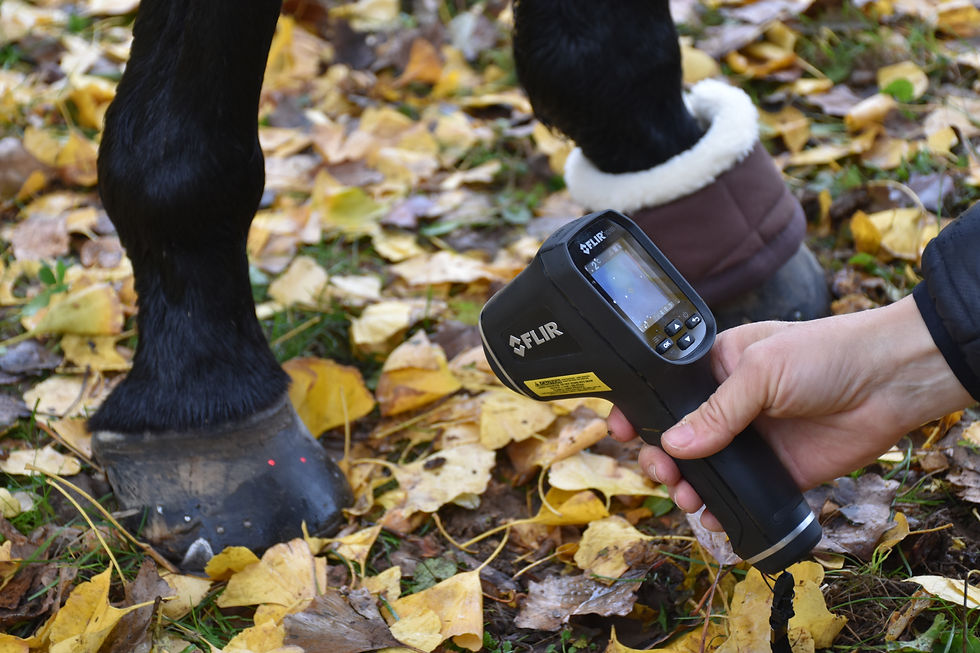
Dr. Elisabetta Bacaro notes:“During cold seasons, thermographic imaging shows a drop in temperature at the coronary band; using bio-ceramics helps restore warmth and circulation, with benefits for hoof health and growth.”
When to Use the Hoofcover
Daily use, especially in winter when growth slows
In the stable or paddock, if the ground is dry and not muddy
Alongside shoeing programs, supplements and veterinary treatments
How to Use Bio Footlife Hoofcover
Clean the hoof: ensure hoof and coronary band are clean and dry
Apply: position and close with the hook-and-loop strap
Maintenance: hand or machine wash with normal detergent, spin-dry safe; fibre properties remain intact
Important Notes
The Bio Footlife bio-ceramic hoofcover does not replace veterinary diagnosis or treatment.Our bio-ceramic fibre is not a medication and must not be used as medical therapy.
It is, however, an effective complementary support for daily hoof management.
👉 For more information, Dr. Elisabetta Bacaro is available for advice and consultations:📧 bacaroelisabetta@gmail.com | 📱 +39 338 7499968
💚 Thank You from LoveHorses
Behind every LoveHorses product lies a story of craftsmanship, passion, customization and quality.
Special thanks to Dr. Elisabetta Bacaro for her contribution and expertise in hoof care.


Comments